MOTS-c Peptide: How It Works, Benefits & Mitochondrial Research
Kelden Peptide Sciences Canada • Research guide • Evidence reviewed October 14, 2026
MOTS-c is a small mitochondrial-derived peptide studied for its role in metabolic signalling, insulin responsiveness and adaptation to cellular stress. Its scientific appeal is unusual: mitochondria may help regulate how a cell uses energy, rather than merely supplying that energy.
The most useful way to read MOTS-c research is to separate three questions: What signal changes? What physiological function changes? In which experimental model? An increase in an energy-sensing pathway, a change in mouse running performance and a clinical benefit in people are different findings.
This guide follows that distinction through AMPK, fuel selection, exercise, aging and research quality. “Benefits” refers to outcomes investigated in research; it does not imply established therapeutic benefits from administering MOTS-c to humans.

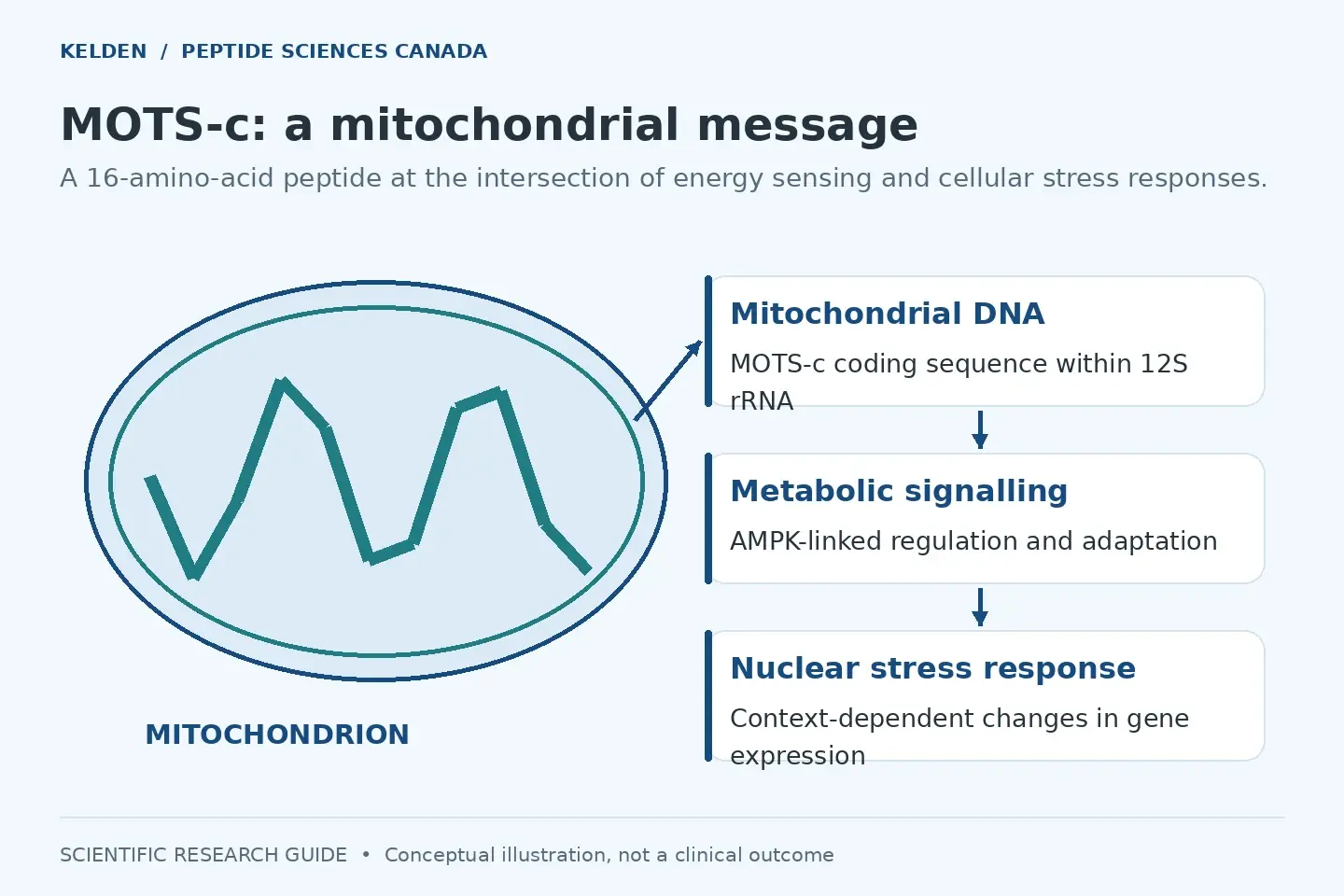
Figure 1. MOTS-c connects mitochondrial genetics with metabolic and stress-response research. The schematic does not depict a validated treatment pathway.
In this guide
What is MOTS-c?
MOTS-c stands for mitochondrial open reading frame of the 12S rRNA type-c. It is a 16-amino-acid peptide encoded by a short reading frame within the mitochondrial 12S ribosomal RNA region. “Mitochondrial-derived” describes its genetic origin; it should not be taken to mean that every subsequent biological action occurs inside mitochondria. The original discovery paper also raised the distinction between mitochondrial encoding and translation using the cytoplasmic genetic code. [1]
Research material is a manufactured peptide used to investigate this biology. Detecting a naturally occurring molecule in the body does not establish that administering a synthetic preparation reproduces its concentration, location or timing.
For compound specifications, see Kelden’s MOTS-c 10 mg research material. Product documentation and experimental evidence serve different purposes: one identifies a material; the other tests a hypothesis.
How MOTS-c works: AMPK and cellular stress responses
AMP-activated protein kinase, or AMPK, helps coordinate metabolism with cellular energy status. In the initial MOTS-c experiments, changes in folate-linked purine metabolism were associated with accumulation of AICAR and activation of AMPK. This is a signalling mechanism, not a claim that MOTS-c supplies calories or directly becomes ATP. [1]
A second line of work asks how the mitochondrial genome communicates with the nucleus. In cultured cells exposed to metabolic stress, MOTS-c moved into the nucleus in an AMPK-dependent manner and participated in regulation of stress-responsive genes, including antioxidant-response-element-associated programmes and interactions involving NRF2. [2]
This matters because an adaptive response can involve more than one timescale. A rapid change in enzyme activity differs from a later change in gene expression. A study measuring only one time point may miss that sequence. Nuclear localization also depends on the model and stressor; it is not an automatic event in every tissue.

Figure 2. Simplified mechanism from cellular research. AMPK-linked signalling and nuclear responses are related but distinct experimental observations. [1, 2]
Mitochondrial health: ATP output is only part of the picture
“Mitochondrial health” is an umbrella term. A useful investigation specifies whether it means respiratory capacity, ATP production, membrane coupling, mitochondrial abundance or the ability to respond to stress. Those measurements can move independently.
In oxidative metabolism, carbohydrate-derived pyruvate and fatty-acid breakdown feed pathways that generate reduced electron carriers. Electron transfer helps establish a proton gradient across the inner mitochondrial membrane, and ATP synthase uses that gradient to support ATP formation. The membrane environment matters: SS-31 experiments using cardiolipin-containing systems and isolated mitochondria directly examined electron transfer, oxygen consumption and ATP-synthesis efficiency. [8]
That is a different experimental question from whether MOTS-c changes metabolic signalling. A rise in an AMPK marker cannot, by itself, establish that damaged mitochondria have been “restored.” Likewise, greater oxygen consumption requires interpretation: it may reflect useful ATP-linked respiration, increased workload or inefficient coupling.

Figure 3. A simplified bioenergetic map. It explains the system in which mitochondrial compounds are studied; it does not claim that MOTS-c directly increases every step.
Metabolic flexibility: why the direction of change matters
Metabolic flexibility is the ability to adjust fuel use to circumstances. During fasting, greater relative fat oxidation can be appropriate. After carbohydrate intake, greater carbohydrate oxidation can be appropriate. During exercise, the mixture depends on intensity, duration, training and fuel availability.
The review identified in the supplied source—PMID 33840072—is useful background on mitochondrial adaptation and metabolic flexibility. It is not an intervention trial demonstrating that MOTS-c restores these functions in humans. [7]
Reading respiratory exchange ratio correctly
Respiratory exchange ratio, or RER, is carbon dioxide production divided by oxygen consumption. Under suitable steady-state conditions, values around 0.70 indicate predominantly fat oxidation, while values around 1.00 indicate predominantly carbohydrate oxidation; protein metabolism and non-steady-state physiology complicate interpretation.
A low RER is therefore not a universal success score. An organism that cannot increase carbohydrate oxidation when appropriate may still be inflexible. In MOTS-c aging experiments, investigators used metabolic cages to examine changes across the day-night cycle, rather than treating one isolated RER reading as a complete assessment. [4]
An illustrative study design would standardize food intake, fasting duration and workload, then compare the response to the same challenge before and after an intervention. This is a proposed measurement framework, not a published MOTS-c treatment protocol. Greater fat oxidation during one test also does not establish long-term loss of body fat.

Figure 4. Flexibility is an appropriate change in fuel use. These are illustrative physiological values, not measured MOTS-c results.
MOTS-c and insulin sensitivity
Insulin sensitivity describes responsiveness to insulin, not simply a low glucose reading. Glucose may remain relatively stable while the insulin concentration required to maintain it changes.
The discovery study examined insulin responsiveness in mice, including clamp-based measurements, and reported protection against diet- and age-related insulin resistance. [1] In the 2019 study by Su-Jeong Kim and colleagues, MOTS-c altered plasma metabolite patterns in diet-induced obese mice. Sphingolipid, monoacylglycerol and dicarboxylate pathways were among the affected groups. [3]
Metabolomics can help identify where to investigate next, but a metabolite concentration is not the same as the rate of flow through a pathway. A reduced intermediate might reflect reduced production, increased consumption or redistribution. It should not automatically be translated into “more beta-oxidation.”
A persuasive follow-up would connect signalling, direct glucose-disposal measurements and tissue-specific fuel flux. That proposed chain of evidence is more informative than assuming one improved fasting marker proves the full mechanism.
MOTS-c and weight management
The initial mouse work reported protection against high-fat-diet-induced obesity. [1] This makes energy balance and body composition reasonable research questions, but prevention of weight gain in a controlled animal model differs from treating established obesity in people.
When evaluating a weight-related claim, ask whether investigators measured fat mass, lean mass, food intake, activity and energy expenditure. Weight alone cannot distinguish those components. It also matters whether the intervention began with the high-fat diet or after obesity had developed.
MOTS-c should not be described as interchangeable with an appetite-targeting drug. Shared words such as “metabolism” or “weight loss” do not establish shared mechanisms, equivalent evidence or comparable outcomes.
MOTS-c and exercise performance
Reynolds and colleagues studied both human exercise responses and mouse interventions. In people, an acute cycling bout was associated with increased endogenous MOTS-c in muscle and circulation. In mice, administered MOTS-c improved physical performance in several age groups. These are complementary findings, but only the mouse component tested peptide administration. [4]
A separate 2022 rodent study found that training increased muscle MOTS-c and that a single experimental 15 mg/kg dose in untrained mice increased running time by 12% and distance by 15%. The study also investigated muscle-specific localization after an exercise challenge. These numbers describe that experiment, not expected human results. [5]
Human exercise data are not uniformly explained by “more MOTS-c is better.” An observational athlete study reported lower serum MOTS-c in professional athletes than in sedentary controls. Acute responses, chronic training status, sampling time and tissue compartment therefore need to be distinguished. [14]

Figure 5. Exercise can be used to study endogenous signalling without administering MOTS-c. Performance experiments in mice answer a separate question. [4, 5]
MOTS-c and healthy aging
Aging research often asks whether function can be maintained, rather than whether a single biomarker can be made more “youthful.” In healthy aging men, one study found lower circulating MOTS-c with age but higher skeletal-muscle expression in middle-aged and older groups than in young men. Muscle fibre composition was relevant to the interpretation. [6]
This is why blood concentration should not be treated as a direct readout of every tissue. Nor does a low concentration diagnose a treatable MOTS-c deficiency.
Mouse work examining late-life intermittent administration adds a functional research direction, but does not establish human lifespan extension. [4] Future trials need clinically meaningful outcomes, appropriate comparison groups and systematic safety follow-up—not only pathway markers.
MOTS-c compared with SS-31, NAD+, L-carnitine and PQQ
These compounds occupy different parts of mitochondrial research. Their biological roles offer reasons to compare them; they do not establish the effectiveness of a combined “mitochondrial stack.”
Compound | Main research distinction |
|---|---|
MOTS-c | |
SS-31 / elamipretide | A mitochondria-targeting peptide studied for cardiolipin-associated membrane interactions, electron transfer and bioenergetics. [8] |
NAD+ | A redox coenzyme and substrate for NAD-consuming enzymes; NAD+, NADH and NAD precursors are distinct experimental interventions. [9] |
L-carnitine | |
PQQ | A redox-active compound investigated in cell models of mitochondrial biogenesis involving CREB and PGC-1α. [11] |
For catalog context, see the separate SS-31 research product and NAD+ research compound pages. Their inclusion here is a mechanism comparison, not evidence of combination efficacy.
The distinctions affect study interpretation. A randomized human carnitine experiment used a 24-week carnitine-plus-carbohydrate intervention and muscle biopsies to examine fuel metabolism. Its findings cannot be assumed for a short exposure or a different formulation. [10] PQQ-induced biogenesis in mouse hepatocyte-derived cells likewise does not establish that a consumer combination generates new functional mitochondria in humans. [11]
NAD-related findings also depend on the intervention. A 12-week randomized trial of the NAD+ precursor nicotinamide riboside in 40 obese men did not improve insulin sensitivity or whole-body glucose metabolism. This tests NR in that population; it neither proves nor disproves the effects of direct NAD+ administration or a MOTS-c combination. [18]
A proper combination study would need controls for each component and the combination, with predefined outcomes. Different mechanisms alone cannot establish synergy, an optimal sequence or a need for “recovery blocks.”
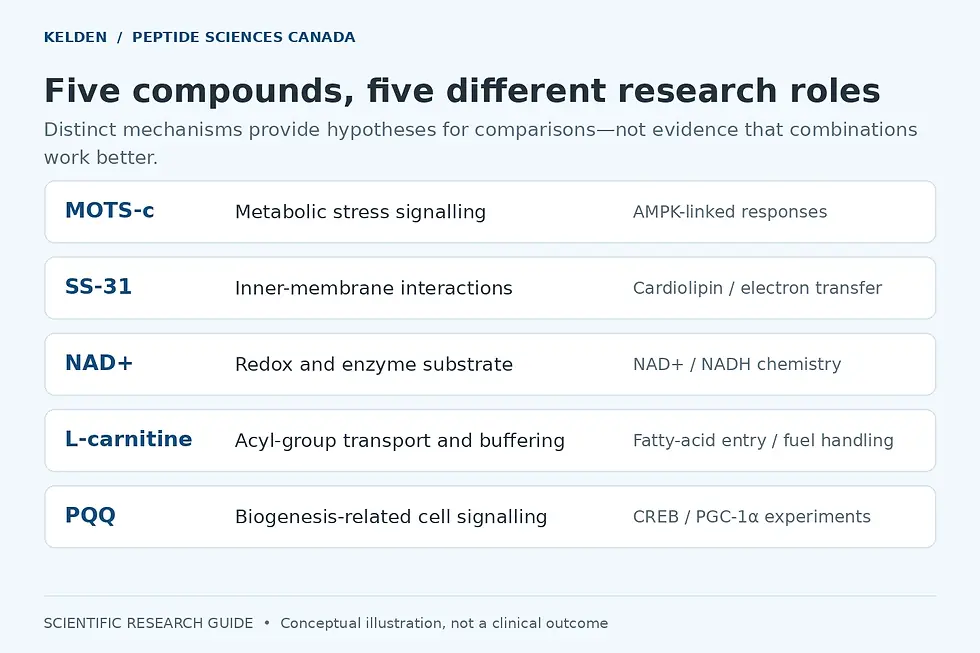
Figure 6. Five distinct research roles. This comparison is not a recommended administration sequence or combination protocol.
Dosage, safety and research considerations
There is no clinically established MOTS-c starting dose, maintenance dose or cycling schedule supported by the studies reviewed here. Experimental amounts must stay attached to the species, route, duration and endpoint of the original experiment.
The 2022 mouse endurance experiment, for example, used a single 15 mg/kg administration. [5] That is not a human dosing recommendation. Copying the number, converting it directly by body weight or substituting a different route does not establish equivalent exposure.
In its July 2026 assessment, FDA reported that it had not identified publicly available clinical studies evaluating administration of the assessed MOTS-c substances to humans for the nominated uses. Its review also identified major gaps in repeat-dose and reproductive toxicology. This does not prove that a particular harm will occur; it means safety cannot be reduced to “almost no side effects.” [12]
Trial registration should also be distinguished from results, and findings for a modified analog should not automatically be assigned to native MOTS-c. A useful clinical evidence claim must identify the actual molecule, formulation, administered exposure, population and published outcomes.
How researchers measure MOTS-c effects
A strong experiment pairs a mechanistic measurement with a functional endpoint. The following is an editorial study-design framework rather than a validated clinical monitoring protocol.
Research question | Measurement and interpretation |
|---|---|
Does fuel selection adapt? | Indirect calorimetry and RER across a standardized challenge; control food, timing and workload. |
Does insulin responsiveness change? | Fasting glucose/insulin for screening; glucose-tolerance testing or a clamp for more direct physiological assessment. |
Does cellular ATP production change? | ATP content plus flux-based bioenergetic assays; distinguish the ATP pool from its production rate. |
Does signalling change? | Phosphorylation measurements, localization experiments and gene-expression analysis, with time-matched controls. |
Does practical function improve? | Standardized performance tests and body-composition measurements, rather than subjective energy alone. |
Fasting insulin and HOMA-IR
The commonly used HOMA1-IR approximation is fasting insulin in µU/mL multiplied by fasting glucose in mmol/L, divided by 22.5. It estimates insulin resistance from a fasting feedback model; it is not a direct muscle-glucose-uptake measurement. HOMA2 uses a different computational model, and values should not be mixed. The original HOMA paper compared model estimates with independent physiological measurements and described limitations in precision. [13]
Repeated sampling under comparable conditions is more interpretable than an isolated before-and-after value. A universal internet cutoff should not replace the laboratory method, population context or clinical interpretation.
ATP, oxygen consumption and extracellular acidification
Extracellular-flux platforms measure oxygen consumption rate (OCR) and extracellular acidification rate (ECAR). Suitable assay designs use these signals to investigate respiration, glycolysis and ATP-production rates. ECAR includes sources of acidification beyond glycolysis; more specific analysis can separate glycolytic proton efflux from respiratory contributions. [16]
For experimental comparison, document cell type, viable cell number, culture medium, substrate concentrations and exposure time. These are proposed quality controls: without them, an apparent metabolic improvement may simply reflect different numbers of surviving cells or different assay conditions.
Research quality, purity and storage
Reproducibility starts before the first assay. A useful material record connects the vial to its batch, analytical report, preparation history and experimental concentration.
Check what each test actually establishes. Chromatographic purity is method-dependent; mass spectrometry supports identity; quantitative content testing addresses how much material is present. Microbiological testing asks a separate question. A purity percentage should not be interpreted as proof of sterility, absence of endotoxin or suitability for human administration.
Researchers can review Kelden’s published laboratory reports and separate microbiology records. Confirm that a report matches the exact batch and method relevant to the experiment rather than generalizing one result to all inventory.
How should MOTS-c be stored?
Use the material-specific technical documentation and validated laboratory procedure. Dry and reconstituted peptide are different stability problems; solvent, pH, concentration, container and temperature can affect the result. Document preparation date and storage history, and minimize uncontrolled handling changes between study groups.
A universal “30-day” or “90-day” reconstituted shelf life cannot be inferred from a generic peptide-storage rule. When stability matters to the result, assess the actual preparation with a suitable stability-indicating method. Appearance alone does not establish chemical integrity.
Frequently asked questions
How long does MOTS-c take to work?
There is no validated human onset timeline for administered MOTS-c in the evidence reviewed here. Cell signalling, mouse endurance and changes in human endogenous levels operate on different timescales. A study’s sampling schedule is not a promised time to feel an effect.
Can MOTS-c be used continuously, or should it be cycled?
Neither continuous use nor a particular cycle is established as a safe, effective human regimen. Animal protocols were designed around specific experimental questions, not to identify a general-purpose maintenance schedule.
What is the best time of day, starting dose or injection frequency?
No clinically validated answer follows from the cited research. Timing and route belong to an approved study protocol. An online schedule repeated by several websites does not become clinical evidence through repetition.
Are injection-site bumps, itching or pain proof that MOTS-c is working?
No. A local reaction cannot identify the active ingredient, confirm purity or demonstrate a metabolic response. Persistent or worsening reactions warrant medical assessment, rather than reinterpretation as evidence of effectiveness.
Is MOTS-c safe for women, the liver or people with thyroid conditions?
The reviewed evidence does not establish safety for those populations or conditions. It also does not establish safety during pregnancy, breastfeeding or long-term exposure. Liver-related benefits in an animal model would not, on their own, establish human liver safety. [12]
Does MOTS-c improve sleep or workout recovery?
The cited exercise studies do not establish treatment of insomnia or a reliable human post-workout recovery benefit. Running capacity, sleep quality and recovery after tissue injury require different endpoints and study designs.
How can researchers tell whether MOTS-c is working?
Define the hypothesis and primary endpoint before the experiment, use matched controls, verify the material and keep assay conditions comparable. Subjective “energy,” testimonials and a single uncontrolled biomarker change cannot determine causation.
Can MOTS-c be combined with SS-31, NAD+ or BPC-157?
Mechanistic differences can motivate a research comparison, but do not validate a stack. BPC-157 is a different peptide; it cannot be ranked against MOTS-c without specifying the model and outcome. No combination regimen is established by the studies summarized here.
Is MOTS-c legal or approved for use in Canada?
A research label does not establish authorization for human use. Health Canada’s April 2026 advisory lists MOTS-C among examples of unauthorized injectable peptide drugs and distinguishes those products from authorized prescription medicines. Laboratory procurement and human therapeutic use must not be treated as the same question. [17]
Is MOTS-c worth the cost, and how can genuine material be identified?
For a research project, value depends on fitness for the assay: identity, measured content, batch traceability, documentation and reproducibility. A lower vial price or a positive user review cannot answer those questions. Compare current specifications in the research compound catalog, and request missing batch information before drawing conclusions.
Key scientific studies: what each contributes
Study | Model, method and contribution |
|---|---|
Lee et al., 2015 [1] | Cellular experiments and mice; discovery, metabolic signalling and glucose/weight-related experiments. |
Kim et al., 2018 [2] | Cell stress experiments; nuclear localization and regulation of adaptive gene expression. |
Kim et al., 2019 [3] | Diet-induced obese mice; plasma metabolomics linking MOTS-c to altered lipid-related pathways. |
Reynolds et al., 2021 [4] | Human exercise sampling plus mouse interventions; separates endogenous exercise responses from administered-peptide effects. |
2022 exercise study [5] | Rodent training and acute performance experiments; links exposure, muscle expression and running outcomes. |
D’Souza et al., 2020 [6] | Human plasma and muscle measurements; illustrates tissue-specific aging associations. |
Read the model column before the headline result. A human tissue observation is valuable evidence about biology, but it does not carry the same inference as a randomized trial administering a defined compound.
Conclusion: a signalling question with measurable endpoints
MOTS-c is scientifically interesting because it connects mitochondrial genetics, cellular stress responses and whole-body metabolic questions. The next useful step is not a broader list of promised benefits, but clearer tests of which pathways change, whether function improves, and whether those findings translate safely to humans.
For further reading, explore Kelden’s peptide research hub and the broader energy and performance research overview. Assess individual claims against their original studies and experimental models.
Scientific references
1. Lee C et al. (2015). The mitochondrial-derived peptide MOTS-c promotes metabolic homeostasis and reduces obesity and insulin resistance. Cell Metabolism. Primary cell and animal research.
2. Kim KH et al. (2018). The Mitochondrial-Encoded Peptide MOTS-c Translocates to the Nucleus to Regulate Nuclear Gene Expression in Response to Metabolic Stress. Cell Metabolism. Primary cellular research.
3. Kim SJ et al. (2019). The mitochondrial-derived peptide MOTS-c is a regulator of plasma metabolites and enhances insulin sensitivity. Physiological Reports. Primary animal research.
4. Reynolds JC et al. (2021). MOTS-c is an exercise-induced mitochondrial-encoded regulator of age-dependent physical decline and muscle homeostasis. Nature Communications. Primary human observational and preclinical research.
5. MOTS-c increases in skeletal muscle following long-term physical activity and improves acute exercise performance after a single dose (2022). Primary rodent research.
6. D’Souza RF et al. (2020). Increased expression of the mitochondrial derived peptide, MOTS-c, in skeletal muscle of healthy aging men is associated with myofiber composition. Primary human observational research.
7. The Role of Mitochondrial Adaptation and Metabolic Flexibility in the Pathophysiology of Obesity and Insulin Resistance: an Updated Overview (2021). Background review, not a MOTS-c intervention trial.
8. Birk AV et al. (2014). Targeting mitochondrial cardiolipin and the cytochrome c/cardiolipin complex to promote electron transport and optimize mitochondrial ATP synthesis. British Journal of Pharmacology. Primary mechanistic research.
9. Pyrroloquinoline Quinone, a Redox-Active o-Quinone, Stimulates Mitochondrial Biogenesis by Activating the SIRT1/PGC-1α Signaling Pathway (2017). Primary cellular research on NAD+-linked signalling; not a trial of administered NAD+.
10. Wall BT et al. (2011). Chronic oral ingestion of L-carnitine and carbohydrate increases muscle carnitine content and alters muscle fuel metabolism during exercise in humans. Journal of Physiology. Primary randomized human study.
11. Chowanadisai W et al. (2010). Pyrroloquinoline quinone stimulates mitochondrial biogenesis through cAMP response element-binding protein phosphorylation and increased PGC-1alpha expression. Journal of Biological Chemistry. Primary cellular research.
12. U.S. FDA (July 2026). MOTS-c clinical-effectiveness assessment and supporting scientific review. Regulatory evidence assessments, not clinical trials.
13. Matthews DR et al. (1985). Homeostasis model assessment: insulin resistance and beta-cell function from fasting plasma glucose and insulin concentrations in man. Diabetologia. Primary methods study.
14. The Effect of Chronic Endurance Exercise on Serum Levels of MOTS-c and Humanin in Professional Athletes. Primary observational study.
15. Muscle-specific deletion of carnitine acetyltransferase compromises glucose tolerance and metabolic flexibility (2012). Primary mechanistic and translational research.
16. Agilent. Seahorse extracellular-flux measurement principles and glycolytic-rate assay explanation. Manufacturer technical documentation.
17. Health Canada (April 9, 2026). Think twice before injecting peptides bought online: unauthorized products can seriously harm you. Canadian regulatory source.
18. Dollerup OL et al. (2018). A randomized placebo-controlled clinical trial of nicotinamide riboside in obese men: safety, insulin-sensitivity, and lipid-mobilizing effects. American Journal of Clinical Nutrition. Primary randomized human study.